
Most writers start alone. You type in a document, show a paragraph to a friend who calls it lovely and changes the subject, and carry on. That works for a while. Then comes the point where you want a room of people who read the way you write — closely, critically, and with some affection for the awkward business of getting sentences right. That room usually exists within a few miles of your kitchen table. Finding it takes less courage than you think; it mostly takes knowing what to look for.
Writing group covers at least four different things, and each asks something different of you. Turning up to an open mic expecting line-by-line notes on your chapter will leave everyone disappointed.
Most writers end up with two: one group that keeps them producing, another that helps them improve what's produced. Start with whichever solves your current problem.
The obvious places still work best. Ask at your local library counter — staff usually know which groups meet in the building and when. Check the noticeboards and events calendars of independent bookshops and arts centres, many of which host readings, short courses and informal meet-ups. Adult education programmes often run evening creative writing classes, and a class is a dependable way to meet people who take writing seriously.
Online, Meetup and Eventbrite list plenty of UK groups, and local Facebook groups for your town or county are worth searching. Regional arts organisations, and bodies such as the National Association of Writers' Groups, can point you towards affiliated groups. University creative writing departments frequently open their public events to all comers, writing festivals run workshops where you'll meet local writers, and book clubs quietly contain two or three people who would rather be writing.
Geography matters less than it once did. If you live somewhere rural, or write in a niche genre, an online critique group may serve you better than the nearest pub gathering.
You are allowed to visit as a guest and decide afterwards. Ask these questions before you hand over a manuscript:
A healthy group answers all of that without flinching. Warning signs: no page limits, so one person's 6,000-word chapter swallows the evening; a member who talks for twenty minutes and never asks a question; feedback that becomes point-scoring; a culture where nothing is ever finished because everything is endlessly revised. Be wary, too, if nobody asks about your work all evening.
Give any group three sessions. You'll know by then whether the tone suits you.
Bring a short piece — under a page if you're reading aloud — and printed copies if others are expected to comment. Bring a notebook and a pen you don't mind losing. Arrive a few minutes early, introduce yourself in one sentence, then listen more than you talk.
When you read, resist the urge to explain the piece first. A line of context is fine; ten minutes of setup is not. If dialogue trips you up when spoken, that's useful information rather than failure. And when comments come, write them down instead of answering them. You can disagree with every word once you're home. Arguing at the table burns your slot and cools the room.
I loved it and it wasn't for me are both dead ends. Try this instead: name one moment that stayed with you and say why; ask one question you genuinely want answered; flag one line where you stumbled. Specific beats kind, and kind beats clever. Aim for two or three minutes per person unless the group says otherwise, and never rewrite someone's work in your own voice. Point at the problem and let them find the solution.
Receiving is a skill as well. Take notes, thank people, decide later what to act on. Not all feedback is right, and no group is a tribunal. If several readers stumble in the same place, though, believe them.
Open mics reward performance as much as writing. Sign up early, because lists fill fast, and rehearse aloud with a timer until you know your first and last lines without looking down. Hold your pages steady so the audience can hear you, use the microphone even if you think you don't need it, and slow down by about a fifth.
Read something complete rather than an extract where you can, and skip the apology at the start. Everyone in the room has stood there nervous. Stay for the rest of the bill, thank the host, and speak to two people afterwards — that's where the real introductions happen. It isn't the place for detailed notes on someone's poem, though. Save the critique for a group that exists for it.
Some groups are lovely and simply wrong for you. If you're the only crime writer in a room of poets, you can still get sharp readers — but if you leave each meeting deflated, that's information. Give it three sessions, then leave politely with a short message. No explanation is owed.
You can also start your own. Book a room in a library or a quiet pub, invite six people, meet monthly for two hours, and write down three rules: how many pages each person may bring, how long feedback runs, and what happens if someone is unkind. That is honestly all a good group needs.
Choose one group type and find two possible candidates this week. Message both, ask your vetting questions, and book into one session as a guest. Take a single page of writing, printed twice, and give feedback to at least two people. Go back a second time before deciding. Whether it turns out to be a fit or not, you'll know exactly what you're looking for next.
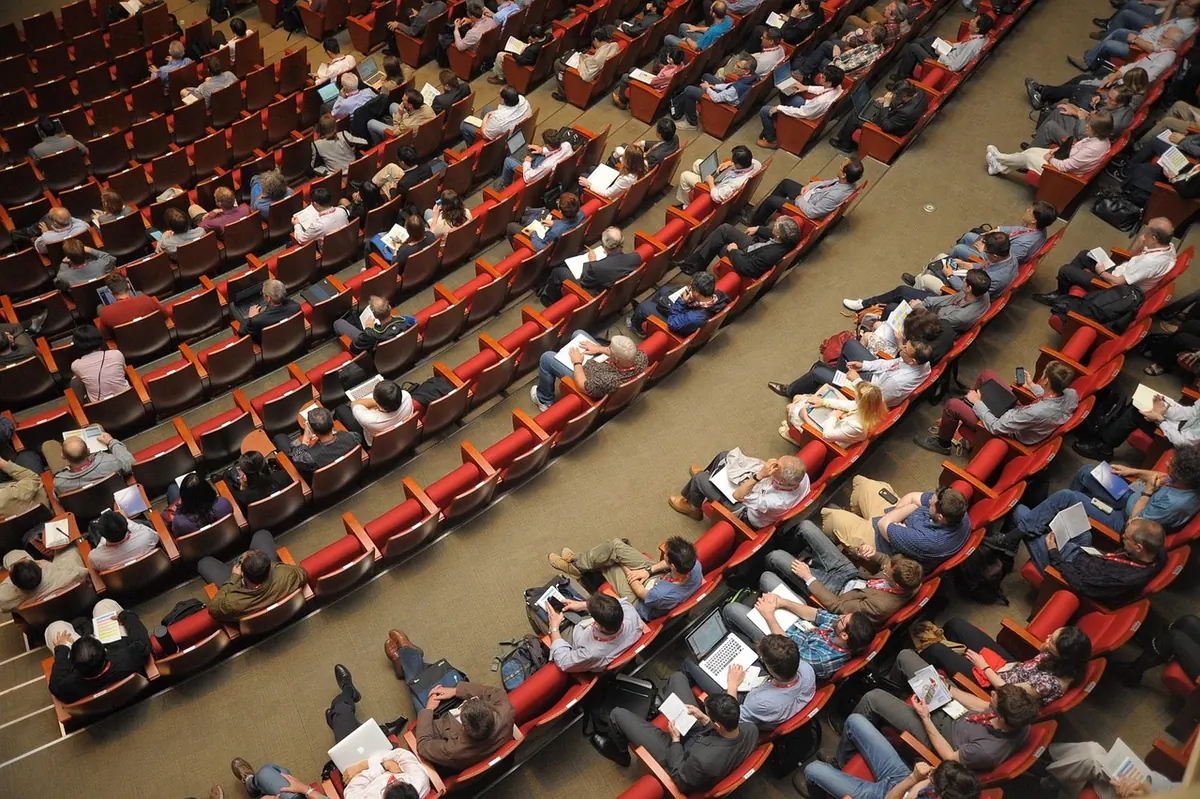
Photo: StartupStockPhotos / Pixabay
Everything you need to plan a spoken-word evening: choosing a venue, building a running order, timing the stories,...

A practical checklist for punctuating dialogue in British English — quotation marks, commas, dashes and dialogue...

Show, don't tell is great advice, badly explained. Here's what it actually means, when telling works better, and...

A hive of stories and creative inspiration.
